

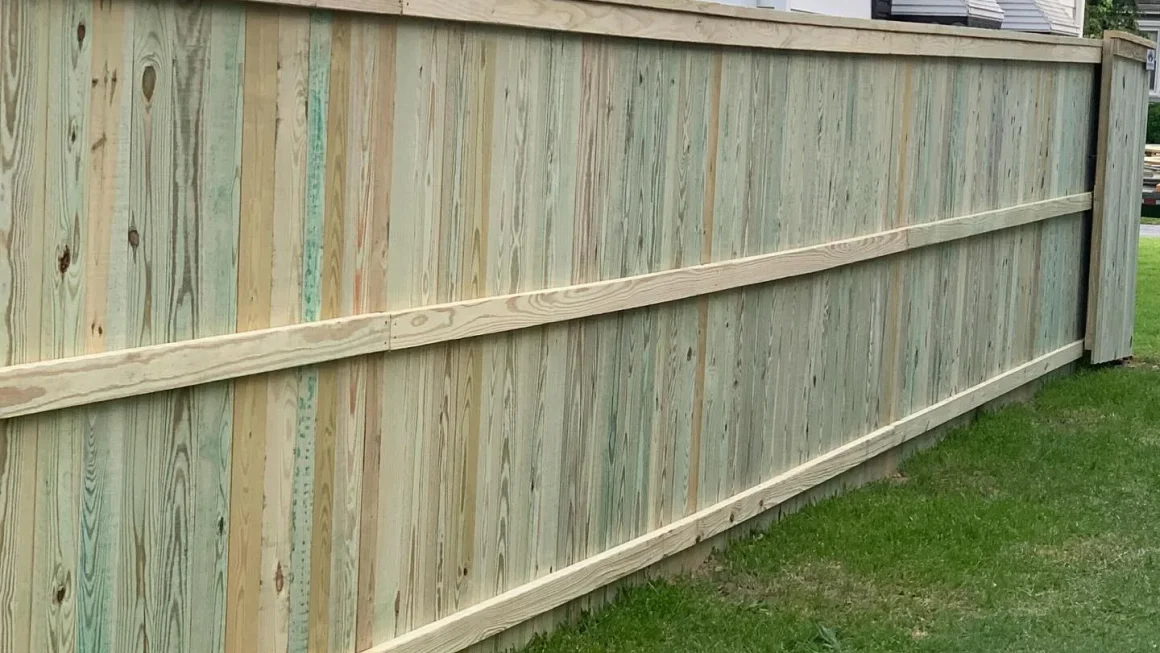
Fence posts carry most of the structural load of a fence, yet their weakest area is often hidden at ground level. Fence post maintenance should focus on movement, moisture, rot, corrosion, and changes in the soil surrounding each post. A leaning panel may be the first visible sign that one supporting post has started to fail.
Test Posts Instead of Judging by Appearance
Push gently against several fence sections and watch how individual posts respond. A healthy post should not wobble independently from the surrounding fence.
Inspect the point where each post meets the ground. Broader home repair references can also be useful when creating seasonal checks for gates, rails, exterior wood, and other exposed structures.
Posts near gates deserve extra attention because opening and closing puts repeated sideways force on the frame and nearby supports.
Look for Moisture and Rot at Ground Level
Wood often deteriorates where changing moisture conditions keep the lower section damp. Probe suspicious areas carefully rather than judging strength from painted or stained surfaces alone.
Soft fibers, crumbling wood, deep cracks, or persistent dampness can indicate deterioration. Homeowners exploring practical property articles may find it useful to pair fence inspections with checks of nearby drainage and landscaping.
Check Metal Hardware Too
Even when the post itself remains sound, brackets, screws, hinges, and fasteners can corrode. Rusted hardware can loosen connections and allow panels to move in wind.
| Post Condition | Common Clue | Maintenance Response |
|---|---|---|
| Loose post | Wobbles under light pressure | Inspect base and soil |
| Wood decay | Soft or crumbling fibers | Assess replacement needs |
| Wet base | Soil stays damp | Improve drainage |
| Rusted hardware | Flaking or weakened metal | Replace damaged fasteners |
Manage Soil and Water Around the Fence
Constantly wet soil can shorten the useful life of wood posts and contribute to movement around other post materials. Sprinklers, roof runoff, grading, and dense vegetation may all keep the base wetter than expected.
Landscaping decisions can either help or worsen that problem. Browsing yard and exterior ideas may provide useful inspiration when reorganizing planting beds, edging, or drainage close to fence lines.
Keep soil and mulch from being piled unnecessarily high around wooden posts. Extra material can trap moisture against surfaces that need opportunities to dry.
Repairs That Often Do Not Last
Adding another screw to a leaning fence panel may tighten the boards while leaving the failed post untouched. The fence can soon lean again because the structural problem remains below.
Bracing a badly rotted post is another temporary measure that can create false confidence. Bracing has a place in some repairs, but severely weakened material usually cannot provide dependable long-term support simply because another piece of wood has been attached to it.
Frequently Asked Questions
Why does a fence post start leaning?
Common causes include loose soil, poor drainage, wood decay, wind loading, damaged footings, and repeated force from gates. Identifying the cause helps determine whether resetting, reinforcing, or replacing the post makes sense.
Can a rotted fence post be repaired?
Minor surface deterioration may sometimes be managed, but extensive decay near the base can remove too much structural strength. Replacement is often more dependable when the post has become soft or unstable.
How can I reduce moisture around fence posts?
Improve drainage, redirect unnecessary runoff, avoid excessive irrigation near the fence, and keep mulch or soil from building up against susceptible materials. The goal is to prevent the post base from staying continuously wet.
Fix the Post Before the Fence Follows
A fence usually becomes unstable one support at a time. Test posts periodically, keep the ground around them reasonably drained, and investigate movement before panels begin pulling apart. Repairing one weakening post early is often far simpler than dealing with several connected sections after the fence has started leaning.