
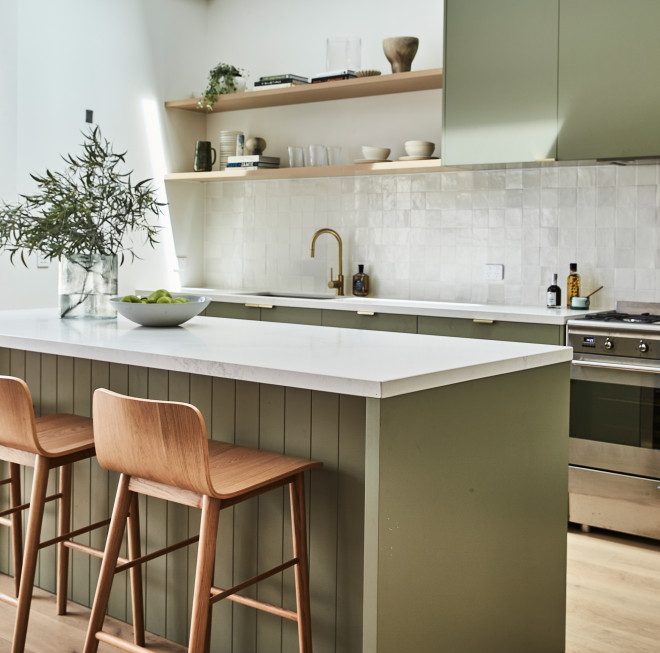
Zellige tile creates interest through small imperfections rather than printed pattern. Slightly uneven surfaces, varied glazing, softened edges, and shifting reflections give a tiled wall movement even when every piece uses the same color.
That character makes zellige useful in kitchens, bathrooms, bars, niches, and feature walls. The most convincing installations allow its handmade appearance to remain visible instead of trying to make every tile look identical.
Let Light Reveal the Uneven Surface
Flat paint responds to light predictably. Zellige doesn’t. One tile may catch a bright reflection while the neighboring piece appears deeper or darker because its surface sits at a slightly different angle.
For that reason, placement near windows, wall lights, pendants, or under-cabinet lighting can make the material especially expressive.
Keep the Color Palette Controlled
A single-color zellige installation already contains variation. White may shift from warm ivory to cooler cream, while green or blue glazes can move through several depths.
Adding too many unrelated colors can compete with the texture that makes the tile distinctive.
Make a Kitchen Backsplash Feel Less Flat
Simple kitchens can sometimes look overly perfect when cabinets, counters, and appliances all have smooth surfaces. Zellige introduces movement without requiring a printed motif.
Outdoor collections featuring textured wall surfaces offer a related lesson: changing how a surface catches light can be as effective as changing color. Indoors, glossy handmade tile creates that shift on a much smaller scale.
Let the backsplash remain the most reflective element if the cabinetry and worktop are already visually quiet.
Highlight Niches and Smaller Wall Sections
A full tiled room can be beautiful, but compact applications often make zellige’s variation easier to notice. Shower niches, vanity backsplashes, beverage stations, and recessed shelving can become strong focal details.
Studying residential wall ideas can help determine which architectural areas deserve emphasis. Rather than choosing an accent wall automatically, look for natural boundaries such as cabinetry, corners, shelving, or built-in openings.
| Application | Tile Approach | Effect |
|---|---|---|
| Kitchen backsplash | Single glossy color | Moving reflections |
| Shower niche | Contrasting shade | Focused detail |
| Vanity wall | Tonal variation | Handmade softness |
| Bar area | Deep glaze | Richer atmosphere |
Pair Handmade Tile With Simple Materials
Zellige works well beside timber because one material is glossy and irregular while the other is warm and grain-based. Plaster, honed stone, concrete, and plain painted walls also provide useful contrast.
A warm layered room can benefit from this balance because reflective tile prevents soft neutral finishes from becoming dull. Even a small patch of glaze can catch changing daylight and introduce energy.
Metal choices can steer the mood further. Aged brass feels warmer, while black or stainless finishes create sharper contrast.
Why Perfect Uniformity Can Work Against Zellige
Trying to sort every tile into an identical shade removes much of the variation people choose zellige for in the first place. Slight changes in tone, edge, and reflection are part of its visual language.
Another mistake is combining handmade tile with too many competing statement materials. Dramatic stone, patterned floors, colorful cabinetry, and highly varied zellige can all fight for attention.
Choose the main feature first. Let the remaining finishes play supporting roles.
Frequently Asked Questions
Why does zellige tile look different throughout the day?
Its uneven glazed surface reflects light from slightly different angles. Changes in daylight and artificial lighting can make individual pieces appear brighter, deeper, warmer, or cooler at different times.
Can zellige work with minimalist interiors?
Yes. A restrained single-color installation can add texture without introducing a busy motif. It works especially well when surrounding cabinetry, walls, and furnishings have simple lines.
Should zellige tiles all be the same shade?
Small shade variations are usually part of the desired handmade appearance. Mixing the pieces across the installation can create a more balanced overall surface than grouping similar tones together.
Make Imperfection the Main Detail
Zellige doesn’t need ornate layouts to feel special. Its appeal comes from small irregularities that become visible as light moves across the wall.
Choose a location where reflection matters, keep surrounding materials relatively quiet, and allow natural variation to remain visible. The result can feel crafted and expressive without depending on complicated patterns or excessive decoration.